Ask most people what they need to retire and they will give you a number. Two crore. Five crore. The corpus has become the goal. But nobody really wants a number. What you want is money that keeps arriving after your last Salary. That is the real difference in corpus vs cash flow.
What a corpus is
A corpus is a pile: mutual funds, EPF, gratuity, fixed deposits. It is genuinely useful. Mutual funds are good at building one, and I have no quarrel with that.
But a corpus pays you in only one way. You sell part of it. Every rupee you live on is a rupee the pile no longer has. That is why so many retirees with large numbers still feel anxious. They are spending the thing that is supposed to protect them.
What cash flow is
Cash flow is income that arrives without selling anything. Rent from a property. A pension. Income from a business or a skill. An annuity. The asset stays. The income repeats.
A corpus says wait thirty years, and then you will have something. An asset says here, you have something now, and it will grow while it pays you.
Why corpus vs cash flow matters at 60
At a safe withdrawal rate of 3%, which Indian research supports, ₹1 crore gives you about ₹25,000 a month (see the numbers). And that ₹25,000 depends on the market behaving in the years you happen to retire into.
Cash flow does not ask the market for permission. During the 2020 lockdown, most of my tenants kept paying, and the structure held without my needing a Salary. Rent has its own risks, a vacancy, a tenant who cannot pay, but none of them force you to sell an asset at the bottom of a crash.
How I moved from one to the other
I started an SIP in 2007 and paid it for nearly four years, through the 2008 crash. When I extended my real returns forward, they did not come close to the projection I had been shown. And even if they had, the corpus would not have paid me a rupee until I sold it.
So I stopped, and in 2012 bought the smallest flat in a residential society, a 1RK, with a loan. I reworked it into a 1BHK so it rented like one. The rent covered about 40% of the EMI, and I paid the rest with less than half of what I used to put into the SIP. By 2015 the rent across my properties covered every EMI. By 2019 I was financially free.
I am not telling you to buy property tomorrow. Property has costs, risks and a learning curve, and it suited my circumstances. I am telling you to ask a different question.
Your Freedom Score
The question is not "how big is my corpus?" It is this:
Freedom Score = (monthly income from things you own ÷ monthly cost of your life) × 100
Count only what lands in your account every month whether you show up or not: rent, a dividend, a retainer, a pension.
| Example | Income from things you own | Monthly cost of life | Freedom Score |
|---|---|---|---|
| Salaried, no assets | ₹0 | ₹80,000 | 0% |
| One rented flat | ₹22,000 | ₹80,000 | 28% |
| Rent plus a pension | ₹60,000 | ₹80,000 | 75% |
At 100%, what you own covers what your life costs. Every step towards it is a step away from depending on a Salary or a market.
How to apply this
- Calculate your Freedom Score today, even if it is zero. Especially if it is zero.
- Keep building your corpus, but give it a job: a reserve, a cushion, a source of future assets.
- Pick one income-producing asset you could own in the next few years, and learn everything about it before you buy.
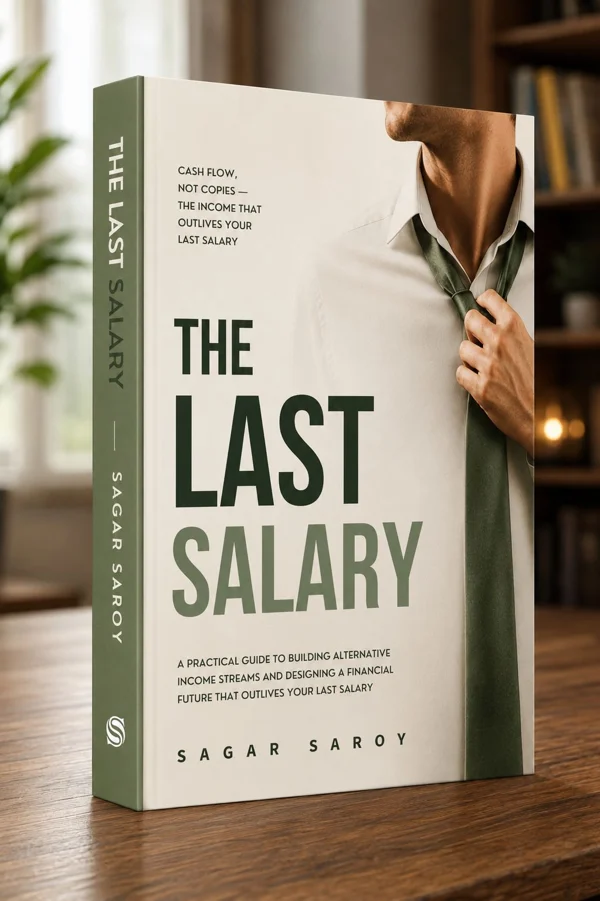
- Read the full argument in Chapter 4, free, or the whole method in The Last Salary.
A corpus is a number you are always afraid of finishing. Cash flow is money that finishes nothing.
Frequently asked questions
What is the difference between corpus and cash flow?
A corpus is a pile of savings you must sell to live on. Cash flow is income that arrives without selling the asset, such as rent, a pension or business income.
Is a large corpus enough to retire?
Not necessarily. At a 3% safe withdrawal rate, ₹1 crore gives about ₹25,000 a month, and that depends on how markets behave early in retirement.
What is a Freedom Score in retirement planning?
Monthly income from things you own, divided by the monthly cost of your life, multiplied by 100. At 100% or more, your life is paid for without touching your corpus.
What are examples of cash flow assets in India?
Rental property, a pension, an annuity, and income from a business or skill. Each has its own risks and costs, so study any asset before buying.
Disclaimer: This article is for education only and is not financial advice. Please consult a certified financial expert before making investment decisions.